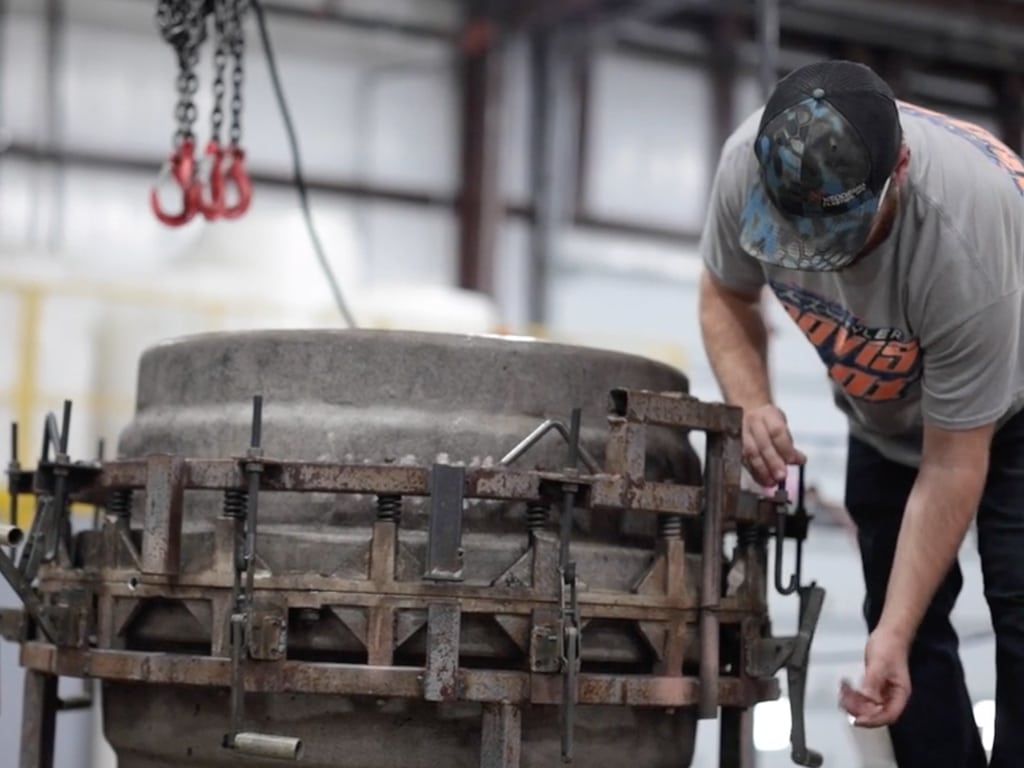
Rotational molding is a specialized plastic forming process that uses low pressure and slow biaxial rotation to produce hollow, seamless parts. This low pressure process contributes to its unique advantages, such as cost-effectiveness and design flexibility. The process begins with powdered resin being placed into a hollow mold. As the mold rotates in a heated oven, the plastic melts and coats the interior surfaces to achieve the desired shape, forming a uniform coating that eventually cools into a solid, one-piece component.
This method is ideal for creating large, complex, or asymmetrical parts that might be difficult or expensive to produce using other methods. Compared to processes like blow molding and injection molding, rotomolding offers a significant cost advantage, especially in terms of lower initial tooling and production costs. This method stands out for producing components with uniform wall thickness, minimal internal stress, and no joints or welds. It shines where complexity, size, and durability matter more than production speed.
Advantages include:
- Uniform wall thickness: Consistent strength and structural balance across the entire part.
- Stress-free construction: No internal pressure during forming means less risk of warping or cracking.
- Exceptional durability: Parts hold up well under impact, chemical exposure, and long-term outdoor use.
- The process results in a finished product that often requires no secondary assembly.
Historically, one of the earliest uses of rotational molding was to produce plastic doll heads in the 1950s, demonstrating the process’s capability to create hollow plastic objects with consistent wall thickness.