
When engineers and product designers begin comparing rotational molding vs blow molding, the conversation often starts with the bottom line: cost and production speed. However, for many high-stakes products, the more critical question is structural performance.
Can the part survive a six-foot drop? Will it bow under the weight of its own contents? Does it need the thick walls required for long-term outdoor survival?
Both processes produce hollow plastic components, yet they achieve strength in fundamentally different ways. Choosing the wrong method isn’t just a technical error; it can lead to cracking, warping, and premature failure that damages your brand’s reputation.
Manufacturers that specialize in custom solutions, such as rotational molding services, act as vital partners to help businesses match their product goals with the right manufacturing process long before the first mold is built. This guide breaks down the structural limits of each method, helping you decide which process fits your next big idea.
Structural Differences of Blow Molding and Rotomolding
For a quick overview of how these two heavyweights stack up, refer to the table below:
| Feature | Blow Molding | Rotomolding |
| Wall Thickness | Typically thin to medium | Thick and heavy-duty |
| Wall Uniformity | Can vary (thinner at corners) | Highly uniform (thickest at corners) |
| Impact Resistance | Moderate | Exceptional |
| Part Size | Small to Medium | Small to Extra-Large |
| Seams/Stress Points | Includes pinch-off lines | Seamless construction |
| Production Speed | Very Fast (Seconds/Minutes) | Slower (Minutes/Hours) |
What Is Blow Molding?
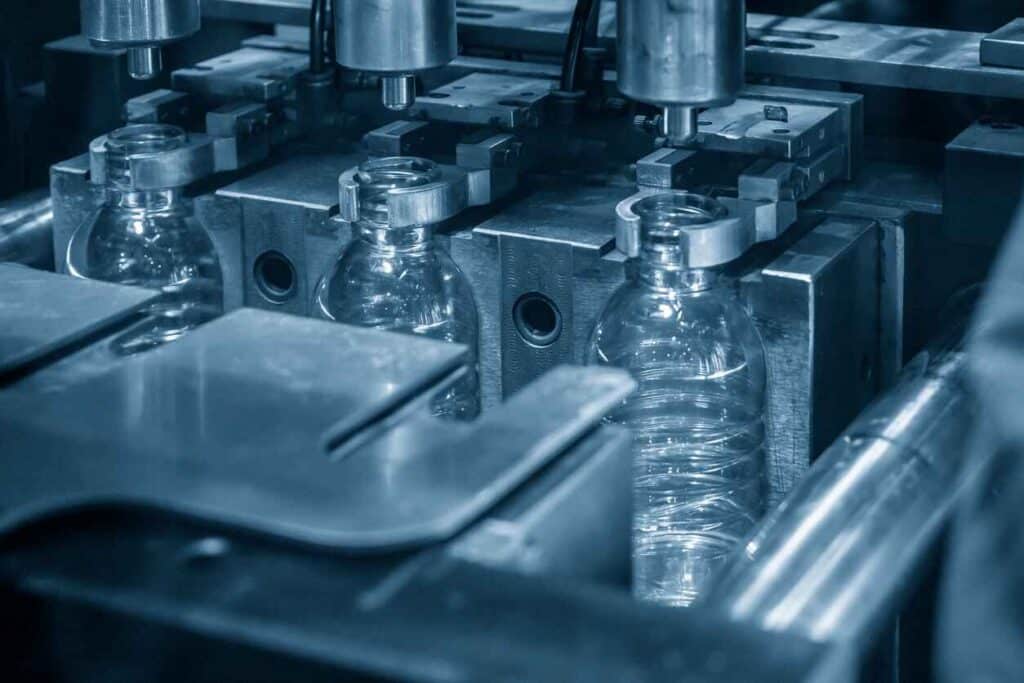
Think of blow molding like glass blowing, but on an industrial scale. The process starts by forming a heated plastic tube called a “parison.” This tube is clamped inside a metal mold, and compressed air is shot into it, inflating the plastic until it takes the shape of the mold walls. Once it cools and hardens, you have a hollow part.
Because this process is incredibly fast and highly repeatable, blow molding is the go-to for high-volume consumer goods. You see it every day in:
- Water and soda bottles
- Automotive fluid reservoirs
- Small fuel tanks
- Lightweight household containers
- Ventilation ducting
What Is Rotomolding?
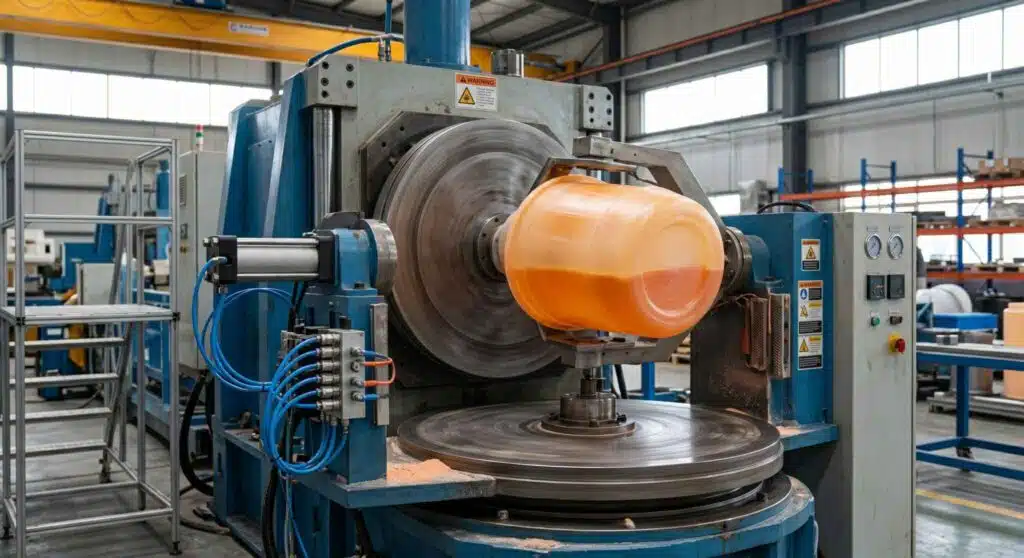
Rotational molding, or rotomolding, takes a much gentler but more robust approach. Instead of using high-pressure air, it uses heat and gravity. Powdered plastic resin is loaded into a hollow mold, which is then placed in a large oven. As the mold slowly rotates on two axes, the resin melts and coats every inch of the interior evenly.
This slow, layering process results in a part that is virtually stress-free. Rotomolding is the preferred choice for large, heavy-duty items that need to last for decades. Common examples include:
- Heavy-duty water and chemical tanks
- High-end coolers and insulated chests
- Commercial trash carts and bins
- Playground slides and tunnels
- Marine buoys and dock sections
Structural Strength: Why Wall Thickness Matters
If you want to understand the soul of a plastic part, look at its walls. The way material is distributed during manufacturing determines whether a product will hold its shape or fold under pressure.
Understanding Blow Molding Limits
Blow molding is designed for efficiency and speed, which typically results in thinner walls. While this is a massive advantage for keeping products lightweight and shipping costs low, it creates a structural ceiling.
During inflation, the plastic stretches. Much like a balloon, the material gets thinner as it reaches the corners of the mold. These thin spots can become “weak links” if the part is subjected to heavy loads or sharp impacts. This is why blow molding is perfect for a detergent bottle, but rarely used for a 500-gallon septic tank.
The Rotomolding Advantage
In contrast, rotomolded parts are built for brawn. Because the liquid resin flows naturally into every corner as the mold rotates, the material actually builds up more thickly in the outside corners and edges.
This “natural reinforcement” is a game-changer for durability. It means the areas most likely to hit the ground or be bumped by a forklift are the thickest, toughest parts of the product. If your design needs to carry a heavy internal load without sagging, the thick, consistent walls of rotomolding are usually the answer.
Impact Resistance and Handling the “Real World”
Many products look great on a computer screen but fail when they hit the real world. Structural integrity isn’t just about how much weight a part can hold; it’s about how it reacts to being dropped, kicked, or dragged.
How Blow-Molded Parts React
Blow-molded parts can be remarkably tough if the right resins are used, such as High-Density Polyethylene (HDPE). However, because the walls are thinner, they have less “mass” to absorb energy. A sharp impact on a blow-molded container is more likely to cause a dent or a crack because there is less material to distribute the force of the blow.
Why Rotomolded Parts Lead the Way
There is a reason why high-end outdoor coolers and whitewater kayaks are rotomolded. These products are essentially “one-piece armors.” The thicker walls and the absence of internal stress during the cooling process allow rotomolded plastic to flex slightly under impact and spring back into shape. If your product is going to be used in a construction site or a playground, you want that extra material protecting it.
Seams, Stress, and Environmental Survival
Every manufacturing process has its “Achilles’ heel.” In plastic molding, those are usually the seams and the effects of the sun.
Avoiding “Pinch-Off” Weakness
In blow molding, the two halves of the mold must “pinch” the plastic tube shut to create a seal. This creates a visible seam or “pinch-off” line. While modern engineering makes these seams very strong, they still represent a potential point of failure under extreme pressure.
Rotomolding, however, creates a seamless, one-piece structure. There are no joints to leak and no seams to split. For products holding hazardous chemicals or large volumes of water, this seamless construction provides a level of security that blow molding simply can’t match.
Fighting the Elements
Outdoor products face a constant assault from UV rays and temperature swings. Because rotomolded products have significantly more mass, they take much longer to “dry out” or become brittle from sun exposure. When you combine this with UV-stabilized resins, rotomolded parts, like those used in marine docks or agricultural bins, can stay structurally sound for 20 years or more in direct sunlight.
Choosing the Right Process for Your Business
Deciding between these two methods usually comes down to a balance of your production volume and your strength requirements.
Choose Blow Molding If:
- You are producing tens of thousands of units.
- The part needs to be lightweight and cost-effective.
- High-speed production is more important than extreme wall thickness.
- You need tight tolerances for parts that must snap together or use precision caps.
Choose Rotomolding If:
- Your production run is lower to moderate (hundreds or low thousands).
- The part is large or complex in shape.
- Structural ruggedness and impact resistance are your top priorities.
- You need a seamless design to prevent leaks or structural failure.
Custom Rotomolding vs. Blow Molding: Final Verdict from Neodesha Plastics
At the end of the day, there isn’t a “better” process – only a more “appropriate” one. Blow molding is the king of high-speed, lightweight efficiency. Rotomolding is the champion of heavy-duty, long-lasting durability.When you are in the early stages of design, the best move is to consult with experts who understand the nuances of plastic behavior. At Neodesha Plastics, we help you navigate these choices to ensure your product doesn’t just look good, but performs exactly as it should under pressure. Choosing the right process today saves you from the costs of redesigns and failures tomorrow.
Frequently Asked Questions
Which Process Has Lower Tooling Costs?
In most cases, rotomolding wins on tooling costs. Because the process doesn’t use high-pressure air or hydraulics, the molds can be made from lighter, less expensive materials like aluminum. This makes it much more affordable for small businesses or specialized products.
Can I Get Complex Shapes With Rotomolding?
Absolutely. Rotomolding is famous for its ability to create complex, multi-walled shapes that would be impossible with other methods. You can also “mold-in” metal threads, handles, and logos directly into the plastic, making the final assembly much simpler.
Is Blow Molding Faster?
Yes, significantly. A blow molding machine can produce a part every 30 to 60 seconds. A rotomolding cycle, because it relies on the slow melting and cooling of powder, can take anywhere from 20 minutes to an hour. This is why blow molding is the standard for high-volume consumer goods.
Can Both Processes Be Used With Recycled Materials?
Yes, both processes can utilize recycled resins, though it is more common in rotomolding for heavy-duty industrial parts where aesthetic “perfection” is less critical than structural mass.
Does Rotomolding Offer Better Color Options?
Rotomolding is excellent for color because the pigment is mixed directly into the resin powder. This creates a “solid” color throughout the entire thickness of the wall, so if the part gets scratched, the color remains the same underneath.